

Blood is red because it contains hemoglobin, an iron-based protein that absorbs blue and green light while reflecting red wavelengths back to your eyes. That’s the quick answer — but the how behind that color involves electron chemistry, light physics, and a persistent myth about blue veins that needs busting.
The short answer
Blood is red because hemoglobin, the oxygen-carrying protein in red blood cells, contains iron atoms that interact with light in a specific way: they absorb blue-green wavelengths (around 540–577 nanometers) and reflect red light (620–750 nm). When you look at blood, you’re seeing the light that bounced off those hemoglobin molecules.
How hemoglobin colour works at the molecular level
The iron atom sits at the heart of hemoglobin’s heme group — a ring-shaped structure called a porphyrin. When oxygen binds to this iron (forming oxyhemoglobin), it shifts the electron configuration slightly. That shift changes which wavelengths of light the molecule absorbs.
Oxyhemoglobin strongly absorbs light at 540 nm (green) and 577 nm (yellow-green). Red light, by contrast, mostly passes through or bounces back. Your eyes receive that reflected red light, and your brain registers “red blood.”
This isn’t just iron being red on its own — pure metallic iron is gray. The redness comes from how iron’s electrons behave when locked into hemoglobin’s structure and exposed to light.
A single red blood cell carries millions of hemoglobin molecules. That’s a lot of tiny light-absorbing machines working in concert.
Why oxygenated blood is bright red and deoxygenated blood is darker
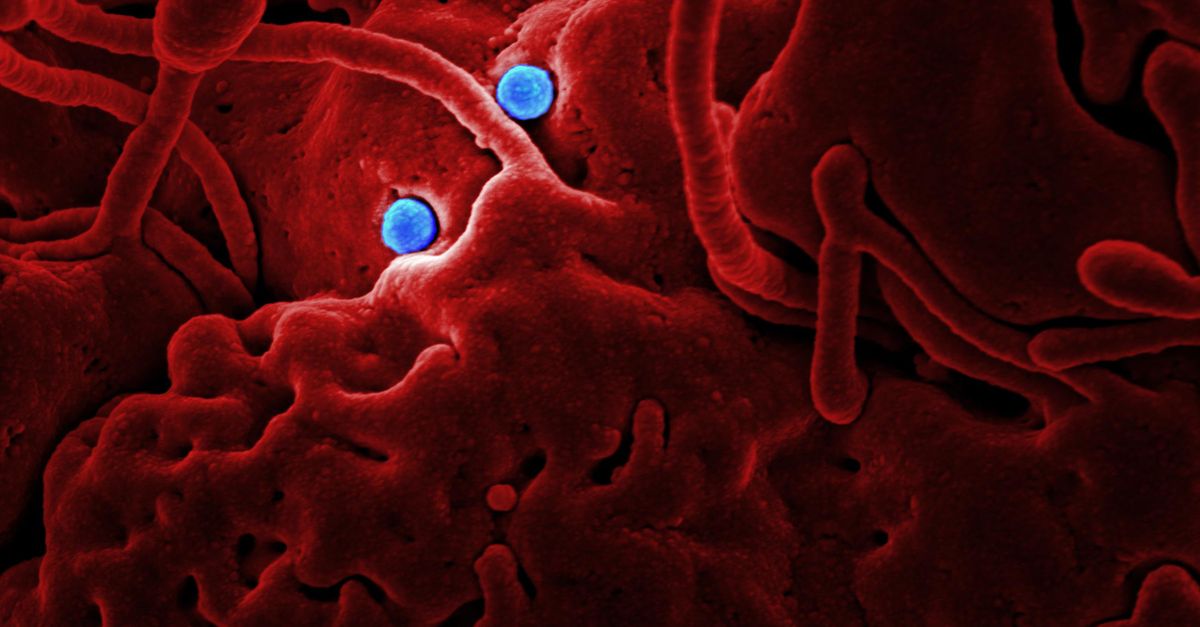
Arterial blood — fresh from the lungs, loaded with oxygen — appears bright, vivid red. Venous blood, which has delivered its oxygen to tissues and is heading back to the heart, looks darker, more maroon or purplish-red.
The difference? Oxygen saturation. When hemoglobin releases oxygen (becoming deoxygenated hemoglobin), the iron’s chemical state shifts again, changing the light absorption profile. Deoxygenated hemoglobin absorbs light differently, peaking around 555 nm, which makes it look darker and less vivid.
Clinically, this color change matters. Medical professionals use blood’s appearance as a quick visual check for oxygenation — bright red suggests good oxygen levels, while dark or purplish blood can signal hypoxia or poor circulation.
Why veins look blue (spoiler: the blood inside is still red)
Here’s the myth: veins carry blue blood. Here’s the reality: all blood is red, whether it’s in arteries or veins. Veins appear blue because of an optical illusion created by how light travels through your skin.
When light hits your arm, red wavelengths penetrate skin but are absorbed on the way back out. Blue and green light, by contrast, penetrate deeper, bounce off the blood in your veins, and scatter back through the skin to your eyes. The skin acts as a filter, selectively absorbing red and letting blue-green through — a process involving Rayleigh scattering and selective absorption.
Proof: if you’ve ever seen blood drawn from a vein, it comes out dark red, never blue. If you apply a tourniquet and make a vein bulge and look very blue, the blood inside is still red — you’re just seeing the optical effect more intensely because more blood is pooled there.
This myth is so persistent that it’s worth stating clearly: blood is never blue inside your body. The vein is blue; the blood is red.
When blood isn’t red: rare exceptions

In a few unusual cases, blood can look different:
-
Carbon monoxide poisoning causes blood to turn cherry-red. Carbon monoxide binds to hemoglobin more tightly than oxygen does, forming carboxyhemoglobin, which reflects light differently and doesn’t release oxygen to tissues.
-
Methemoglobinemia is a rare condition (genetic or acquired) where iron oxidizes from Fe²⁺ to Fe³⁺, turning blood chocolate brown. The iron can no longer carry oxygen effectively.
-
Cyanosis — the bluish tint you see on someone’s lips or fingertips when they’re oxygen-deprived — isn’t the blood turning blue. It’s the lack of oxygen causing deoxygenated hemoglobin to dominate, and the skin’s optical filtering makes the underlying dark blood look bluish.
These exceptions are clinically significant. Blood color is a diagnostic tool, not just an aesthetic quirk.
What about animals with non-red blood?
Not all animals use iron-based hemoglobin. Horseshoe crabs and many mollusks have blue blood because they use hemocyanin, a copper-based oxygen carrier. Some marine worms have green or purple blood from other respiratory proteins. But in humans and most vertebrates, red is the universal standard.
FAQ
Is blood actually blue inside the body?
No. All blood inside your body is red — either bright red (oxygenated) or dark maroon-red (deoxygenated). The “blue blood” myth comes from veins looking blue through your skin, which is an optical illusion caused by how light filters through tissue.
Why does blood turn dark red in veins?
Hemoglobin releases oxygen to tissues, shifting from oxyhemoglobin to deoxygenated hemoglobin. This changes the molecule’s light absorption, making venous blood appear darker and more purplish-red than the bright red arterial blood.
Can blood be a different color?
Rarely. Carbon monoxide poisoning makes blood cherry-red. Methemoglobinemia turns it chocolate-brown. In other species, hemocyanin (copper-based) produces blue blood, but human blood is always some shade of red.
Do all animals have red blood?
No. Many invertebrates and marine animals use copper-based hemocyanin (blue), hemerythrin (purple), or chlorocruorin (green). Red blood from iron-based hemoglobin is common in vertebrates, but it’s not universal across the animal kingdom.
Blood’s redness isn’t decorative — it’s a direct consequence of how iron’s electrons interact with light, and it serves as a built-in diagnostic signal. The next time you see a vein looking blue through your skin, you’ll know the truth: the blood inside is as red as ever.
Written for general interest and accuracy-checked, but not a substitute for specialist sources.
For more on how your body moves and expels things at surprising speeds, check out more on how fast can a sneeze travel? the surprising physics behind it.