

In 1967, marine biologist Roger Payne dropped a hydrophone into the waters off Bermuda and recorded something no scientist had properly documented before: a humpback whale singing a twenty-minute sequence of moans, whoops, and trills, then starting the whole thing over again, note for note. When Payne and his colleague Scott McVay analyzed the recordings, they realized the songs had structure—repeated themes and phrases, like verses in a ballad. The discovery upended assumptions about ocean mammals and sparked a question we’re still refining answers to: why do whales sing?
The short answer
Whales sing for multiple overlapping reasons: to advertise during breeding season, to maintain social bonds within their group, and possibly to navigate or coordinate behavior across distances. It’s learned behavior, not instinct, and the songs change year to year.
What whale singing actually is
“Singing” in whales refers to patterned, repeating vocalizations. Humpback whales are the most studied singers, producing songs that last 20 to 30 minutes and can repeat for hours. But humpbacks aren’t alone—bowhead, right, gray, blue, fin, and minke whales all produce complex vocalizations that qualify as song.
The term gets murky when applied to toothed whales like sperm whales, orcas, and dolphins. These species communicate, but they use clicks, whistles, and burst pulses rather than the melodic sequences baleen whales produce. A sperm whale’s rapid-fire clicks serve echolocation and social signaling, but calling that a “song” conflates two fundamentally different communication strategies. When most people ask why whales sing, they’re asking about baleen whales—the ones whose vocalizations sound, to human ears, almost musical.
Humpback songs are built from units (single sounds), arranged into phrases, then themes. A typical song contains four to six themes sung in a fixed order. What makes this remarkable is consistency: all the males wintering in Hawaiian waters sing nearly identical songs in a given season, as if they’re working from the same score.
Why they do it

The most documented function is breeding advertisement. Male humpbacks sing almost exclusively during the winter breeding season, often while alone and stationary. The leading hypothesis, supported by decades of observation, is that singing attracts females or signals dominance to rival males—or both. But mating alone doesn’t explain the full picture.
Whale song also appears to serve social cohesion. Populations that migrate and feed together maintain shared song dialects, even when individuals are separated by miles of open ocean. Singing may reinforce group identity, the way human accents mark regional belonging.
Some researchers believe song aids navigation, particularly during migration. Low-frequency calls could function as acoustic beacons, helping individuals stay oriented relative to geographic features or each other across featureless ocean. The evidence here is thinner—more inference than documentation—but the overlap of song with migration timing is suggestive.
In toothed whales like orcas, vocalizations clearly coordinate hunting. Resident orca pods in the Pacific Northwest use distinct call repertoires during cooperative salmon hunts. While that’s not “singing” in the humpback sense, it underscores a broader truth: marine communication rarely serves a single purpose.
The dialects—and how they change
Here’s where whale song gets strange. Humpback populations separated by thousands of miles—say, whales wintering in Hawaii versus those off the coast of Mexico—sing detectably different songs. The Hawaiian population might emphasize ascending whoops in their second theme; the Mexican population, descending moans. These are geographic dialects, and they’re learned, not genetic.
Research published in Current Biology documented how songs spread horizontally across populations. A new phrase appearing in eastern Australian humpback songs one season turned up, nearly note-for-note, in songs recorded off French Polynesia the next year—across 3,700 miles of ocean. The songs didn’t mutate randomly; they were transmitted, probably when individuals from different populations encountered each other on feeding grounds or during migration.
Even stranger: the songs evolve within a breeding season. Payne’s longitudinal recordings from the 1960s through the 1990s show that a population’s song in February differs from the same population’s song the previous November. New themes emerge mid-season, old ones drop out, and by the next breeding cycle, the song has transformed. All the males adopt the changes in near-lockstep, suggesting they’re listening to and learning from each other in real time.
This isn’t instinct. It’s culture.
Bowhead whales in the Arctic show similar flexibility. Each spring, bowheads produce a repertoire of songs—but the specific songs change year to year, and individuals don’t repeat the same song twice in a row. Scientists comparing recordings from different decades found almost no overlap in the song catalog, implying the repertoire cycles or evolves faster than we initially thought.
How sound travels underwater—and how far
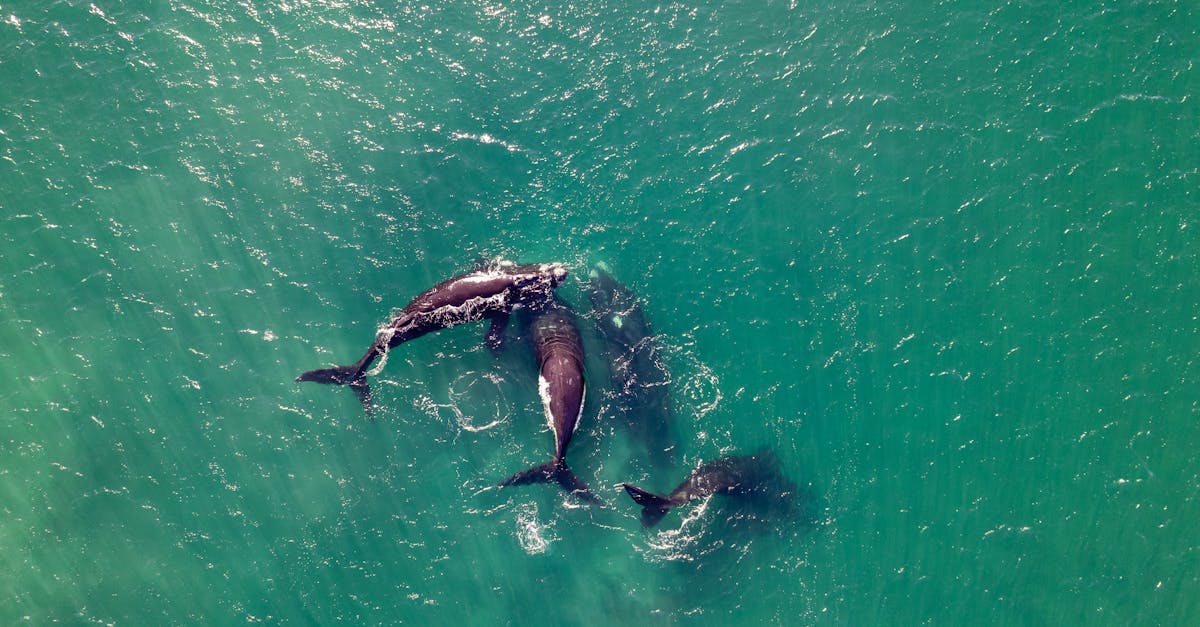
Whale songs work because water is an excellent conductor of sound, especially at low frequencies. A humpback’s lowest notes hover around 20 to 40 Hz—near the bottom of human hearing. Blue whales go even lower, producing calls around 10 to 40 Hz that register around 188 decibels underwater (for context, a jet engine at takeoff is about 140 dB in air, though the two mediums aren’t directly comparable).
In the deep ocean, these low-frequency calls can travel along the SOFAR channel—a layer where temperature and pressure create a “sound highway” that lets vocalizations carry for hundreds of miles with minimal loss. A blue whale calling off California could theoretically be heard by another whale near Hawaii, roughly 2,500 miles away, under ideal conditions.
Reality is messier. Ocean temperature, salinity, depth, and ambient noise all affect propagation. And ambient noise has skyrocketed since the mid-20th century. Shipping traffic, naval sonar, seismic surveys, and underwater construction have increased background ocean noise by an estimated 20 decibels in some frequency ranges since the 1960s—roughly a hundredfold increase in acoustic intensity. According to NOAA’s Ocean Acoustics Program, this forces whales to sing louder, shift frequency, or repeat phrases more often to be heard, potentially raising the energetic cost of communication during long migrations.
We don’t yet know if this acoustic pollution is affecting whale reproductive success, but it’s plausible: if a male’s song doesn’t carry as far, his chance of attracting a mate or coordinating with his group drops.
What we still don’t understand
Despite decades of study, we can’t decode whale songs the way we might translate a foreign language. We can identify patterns, track how they change, and correlate singing with behavior like breeding or migration—but we don’t know what a specific phrase means, if “meaning” even applies. Saying “whales communicate” is accurate; saying “whales are talking about X” is speculation.
We also know almost nothing about female vocalizations in many species. Early research focused on males because they’re the conspicuous singers, but females likely communicate too—just not in the same register or context we’ve been listening for.
And the question of why songs evolve remains open. Do new phrases carry information—an individual’s identity, a navigation cue, a learned foraging trick? Or is song evolution more like fashion, driven by preference and novelty rather than functional advantage? The evidence leans toward the latter, but the data is incomplete.
FAQ
Do whales only sing during mating season?
No. Humpback singing peaks during the winter breeding season, but males have been recorded singing on migration routes and even on feeding grounds in summer, though less frequently. The function of off-season singing is unclear—possibly practice, possibly social bonding.
How far does whale song travel?
Low-frequency calls can travel 100 to 1,000+ miles depending on the species, ocean conditions, and background noise. Blue and fin whale calls travel farthest; higher-frequency humpback phrases attenuate faster but still carry tens to hundreds of miles.
Do all whales sing, or just some species?
Most baleen whales produce song-like vocalizations. Toothed whales (sperm whales, orcas, dolphins) communicate with clicks, whistles, and codas instead of melodic songs. The term “singing” applies best to humpback, bowhead, and a few other baleen species.
Why do whales change their songs?
Songs likely evolve through social learning—new phrases spread when whales hear and adopt variations from others. Why animals prefer novelty or how they “decide” to adopt changes isn’t fully understood, but the pattern resembles cultural transmission in songbirds and humans.
Can humans understand what whales are saying?
Not yet. We can analyze structure, identify individuals by voice, and correlate song with behavior, but we can’t translate specific phrases into discrete meanings. We’re eavesdropping, not conversing.
Whale song is one of nature’s most documented mysteries: we know it happens, we know roughly why, and we’ve cataloged thousands of hours of recordings. But the deeper questions—what it feels like to a whale, what information passes in those repeating refrains, why innovation spreads the way it does—remain just out of reach. For now, the songs are proof that ocean mammals live in a social and acoustic world as rich as ours, even if we’re still learning its grammar.
If you’re curious how other animals communicate in unexpected ways, see more on how do bees communicate? for a look at the waggle dance, or more on how do plants communicate underground? for the fungal networks that let forests “talk.”
Written for general interest and accuracy-checked, but not a substitute for specialist sources on marine biology or whale behavior.