
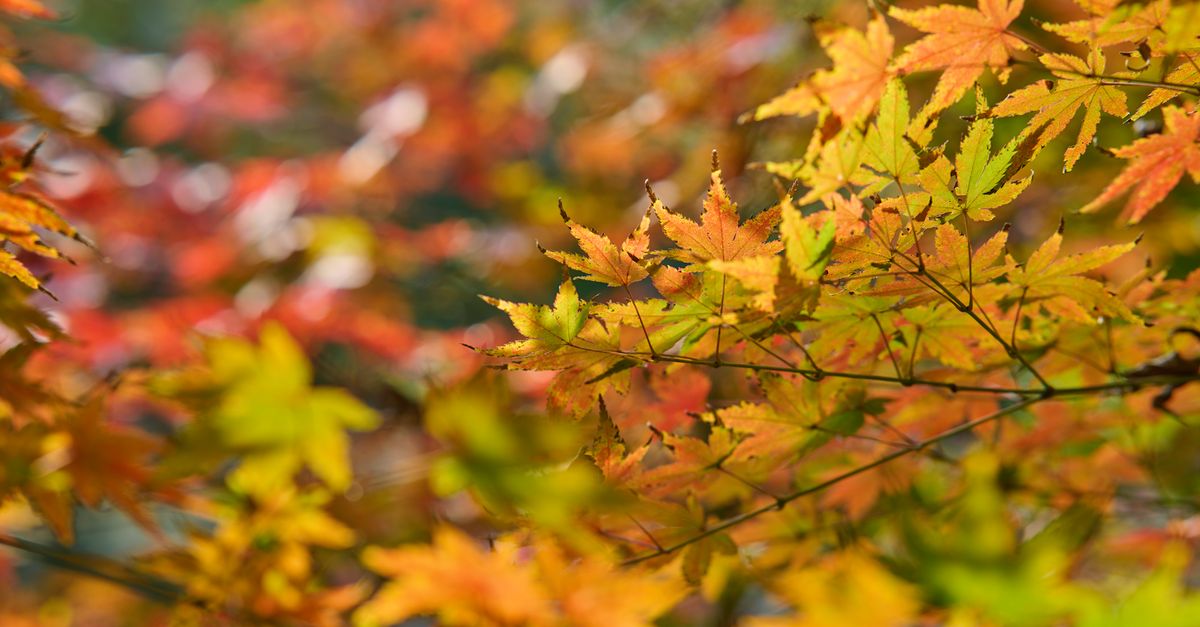
A sugar maple in mid-October can display orange, red, and yellow all in the same crown. A week earlier, it was uniformly green. The transformation looks sudden, but the tree has been orchestrating it for weeks—shutting down summer operations, extracting what it can salvage, and preparing for dormancy.
The short answer
Leaves change color when trees stop producing chlorophyll (the green pigment that powers photosynthesis), revealing yellow and orange pigments that were masked all summer. But that’s only half the story: trees also produce new red and purple pigments in autumn, even as they’re shutting down. The trigger isn’t a hard freeze—it’s shortening days and cooling temperatures.
The reveal: why green fades and yellow appears
All summer, chlorophyll dominates. It’s the workhorse pigment, absorbing red and blue light to fuel photosynthesis. It’s also expensive to maintain—constantly broken down by sunlight and remade by the tree. As long as days are long and temperatures are warm, the cost pays off.
When day length drops below about 12 hours (around the September equinox in the Northern Hemisphere), the tree receives its signal: time to prepare for winter. Cool nights—ideally between 45°F and 55°F—accelerate the process. The tree begins forming an abscission layer, a barrier of cells at the base of each leaf stem that blocks water and nutrients from entering the leaf. Chlorophyll production stops.
As existing chlorophyll breaks down over the next one to three weeks, two other pigments become visible: carotenoids (yellow and orange) and xanthophyll (pale yellow). These pigments were present all along, bound to the leaf’s photosynthetic machinery, but chlorophyll’s dominance masked them. Think of it as removing a green filter: the yellow and orange were always there underneath.
Birches and aspens are high in carotenoids, which is why they turn reliably gold each autumn. The timing is consistent because the reveal is passive—no new pigment production required, just the fadeout of green.
The production: why some leaves turn red
Red and purple leaves—the showstoppers of a New England autumn—aren’t just reveals. Trees actively produce anthocyanins, a new class of pigments, in autumn. This happens even as the tree is shutting the leaf down and preparing to drop it. Why invest energy in making new pigments for a leaf you’re about to discard?
Three explanations, all supported by research:
-
UV and frost protection. Anthocyanins absorb ultraviolet radiation and may shield the leaf from frost damage during the nutrient-recovery window. The leaf isn’t dead yet—it’s still extracting nitrogen, phosphorus, and potassium to transport back into the tree. Protecting that process gives the tree a more efficient shutdown.
-
Light regulation for nutrient recovery. Red pigment may help fine-tune light levels within the leaf, optimizing the biochemistry of nutrient extraction.
-
Herbivore signaling (more speculative). Bright reds may warn insects that the leaf is about to drop, or signal that the tree is well-defended. The evidence here is thinner.
The key factor: anthocyanin production requires sunny days and cool (but not freezing) nights. A cloudy, warm autumn produces yellows but few reds. A sunny autumn with nights in the 45–55°F range delivers the vivid reds and purples of a classic foliage year.
According to Cornell University’s foliage prediction research, the optimal temperature range for intense color is daytime highs of 60–75°F and nighttime lows of 45–55°F. Below 40°F at night, the process accelerates too fast and color can be muted; above 70°F at night, chlorophyll lingers and the transition slows.
The chlorophyll breakdown: what happens to green

Chlorophyll doesn’t vanish overnight. The tree enzymatically dismantles it, recovering the magnesium at its core and metabolizing or abandoning the carbon framework. This breakdown is controlled and deliberate—part of the tree’s nutrient salvage operation before it drops the leaf.
The timeline, from abscission layer formation to leaf drop, generally follows this progression based on plant physiology research:
- Days 0–5: Chlorophyll production stops; existing chlorophyll begins breaking down.
- Days 5–14: Carotenoids become visible as chlorophyll levels drop below 30%.
- Days 7–21: Anthocyanins accumulate in sunny conditions.
- Days 14–21: Leaf fully senescent; abscission layer seals; leaf drops.
This is a healthy, normal process—what botanists call senescence. The tree is preparing for dormancy, not dying. The abscission layer acts as both a valve (shutting off the leaf’s water supply) and eventually a clean break point. When the layer is complete, the leaf detaches with minimal damage to the branch.
The hard freeze myth
Here’s what a hard freeze does not do: change leaf color overnight.
The widespread belief that a single cold snap “turns the leaves” conflates two separate events. The color change is already underway, triggered by day length and cooling temperature trends. A hard frost (temperatures below 32°F) accelerates leaf drop by damaging the leaf tissue and completing the abscission process faster. But it doesn’t create the color—if anything, an early hard freeze can catch trees mid-transition, producing patchier, less vivid displays.
As North Carolina State University plant scientists have documented, the day-length signal is what initiates the cascade. Temperature modulates the speed and intensity, but a single freeze is not the switch. This distinction matters if you’re trying to predict foliage timing: watch the calendar and the nighttime temperature trends, not the first frost date.
Why some years are brilliant and others disappointing

The recipe for a standout foliage year:
- Late summer moisture (moderate soil moisture through August and September, avoiding both drought and flooding)
- Sunny autumn days (to drive anthocyanin production)
- Cool nights (consistently in the 45–55°F range through September and October)
- No early hard freeze (which would halt the process before colors peak)
A warm, cloudy fall produces yellows but muted reds. A drought-stressed tree may drop leaves early with poor color. An early freeze truncates the display. Year-to-year variation is enormous, and USDA Forest Service foliage maps show regional swings of 1–2 weeks in peak timing depending on that autumn’s weather patterns.
Individual tree stress—insect damage, disease, physical injury—also suppresses color intensity. A tree dealing with emerald ash borer or drought may skip the showy phase entirely and drop leaves early. This is a stress response, not necessarily a death sentence, but it’s why a single street can show dramatic variation from tree to tree.
What climate change is shifting
Long-term records since the 1950s, tracked by NASA Earth Observatory satellite imaging, show peak autumn colors arriving 1–2 weeks earlier in many Northern Hemisphere regions. Warmer springs delay the day-length trigger slightly, and warmer autumns can mute color intensity. The window is shifting, not disappearing, but the classic mid-October peak in New England may edge toward late September in coming decades.
Species variation: who turns which color
Not all deciduous trees are created equal. Some produce anthocyanins reliably; others stick to carotenoid yellows.
| Species | Typical colors | Year-to-year variation |
|---|---|---|
| Sugar maple | Red, orange, yellow | High—depends on weather |
| Red maple | Bright red | Moderate—more consistent |
| Birch | Yellow, pale orange | Low—very consistent |
| Red oak | Red, burgundy | High—weather-dependent |
| White oak | Russet, brown | Low—muted palette |
| Aspen | Gold, yellow | Low—reliable gold |
Data from the Smithsonian Institution’s North American tree species records.
The same tree can show multiple colors simultaneously (Norway maples often display orange, red, and yellow in the same crown), and individual genetic variation means two sugar maples on the same street may peak a week apart.
FAQ
Why do some leaves turn red and others yellow?
Different species contain different pigment ratios and capabilities. Maples and sumacs produce anthocyanins readily; birches and aspens are carotenoid-dominant and turn yellow. The same tree may produce both, depending on sun exposure and temperature.
Can you predict which year will have the best fall foliage?
Roughly, yes: a sunny, cool autumn (nights 45–55°F, sunny days) produces vivid colors. A warm, cloudy fall mutes them. But regional and microclimate variation is significant—conditions that make Vermont brilliant may not apply to the Upper Midwest the same week.
Does a frost change the leaves faster?
No. A hard frost halts photosynthesis and speeds leaf drop, but the color change was already underway. An early freeze can catch trees mid-transition, producing less vivid, patchier color.
Why don’t evergreens change color?
Evergreens (pines, spruces, firs) retain needles year-round and continue photosynthesis through winter. A few conifers—larch and tamarack—are deciduous and do change color, turning gold before dropping.
Autumn color is neither cosmetic nor accidental. It’s a tree’s final resource extraction before winter shutdown—green machinery dismantled, salvageable nutrients recovered, and the leaf discarded. The reds and golds are byproducts of that meticulous process, visible to us only because we happen to be watching. If you want to explore the dormancy strategies that make winter survival possible across species, related coverage is available elsewhere on Fun & Facts.
Written for general interest and accuracy-checked against USDA Forest Service, Smithsonian Institution, Cornell University, NASA Earth Observatory, and North Carolina State University peer-reviewed plant physiology sources.