

You’re stroking your cat’s chin, and there it is: that low, rumbling purr vibrating through your lap. Contentment, right? Usually — but not always. Cats also purr at the vet. They purr when injured. They purr during labor. So if purring doesn’t always mean “I’m happy,” what does it mean?
The short answer
Cats purr when content, but also when stressed, anxious, injured, or in pain. Purring is semi-automatic — triggered by the brain — and serves multiple purposes: bonding, self-soothing, and possibly promoting healing. Context and body language matter far more than the sound itself.
How cats purr: the mechanics behind the rumble
What makes cats purr isn’t magic — it’s anatomy. The purr originates in the larynx (voice box), where two sets of folds vibrate rapidly as air passes through during both inhalation and exhalation. The vocal cords and the vestibular folds above them open and close at 25 to 150 Hz — roughly 40 to 50 times per second on average — producing that continuous, rumbling sound.
Think of it like a tiny hummingbird in the throat. The vibration is controlled by the laryngeal muscles, which receive signals from the brain via the vagus nerve. Once triggered, the purr becomes mostly automatic; cats can’t fully suppress it at will, much like you can’t stop breathing consciously for long.
The sound resonates through the chest and throat, which is why a purring cat feels like it’s vibrating in your hands. And unlike human vocalization — which happens only during exhalation — cats purr on both the inhale and the exhale. That’s what keeps the rumble going without pause.
Source: Journal of Feline Medicine and Surgery (2006); UC Davis College of Veterinary Medicine.
Not all cats purr equally. Some are naturally quieter; others barely audible. Genetics and individual variation play roles, but most domestic cats — roughly 99% — purr at least occasionally.
A note on wild cats
Big cats diverge sharply here. Cheetahs, cougars, and smaller wildcats purr. Lions, tigers, leopards, and jaguars cannot — they roar instead, thanks to a different laryngeal structure (a flexible hyoid bone rather than rigid cartilage). Evolution gave them a choice: purr or roar, not both.
Source: Smithsonian Magazine, “Why Some Wild Cats Roar and Others Purr” (2019).
When and why cats purr: it’s more than happiness
Do cats purr when happy? Yes — but that’s only part of the story.
Cats purr across multiple contexts, and the cat purring meaning shifts with the situation:
| Context | Likely meaning |
|---|---|
| Relaxed, being petted | Contentment, bonding |
| At vet or during injury | Self-soothing, anxiety |
| Feeding time | Pleasure, anticipation |
| During labor | Coping mechanism |
| With kittens | Bonding, maternal instinct |
Contentment and bonding
The familiar purr happens when cats are at ease: curled in your lap, being stroked, fed, or snuggled with trusted humans. Purring signals affiliation — a social behavior cats use to bond with mothers, littermates, and human caregivers. Kittens start purring at just 2 to 3 days old, long before their eyes open, to signal their presence to mom.
Source: ASPCA cat development timeline; International Association of Animal Behavior Consultants (IAABC).
Stress, pain, and self-soothing
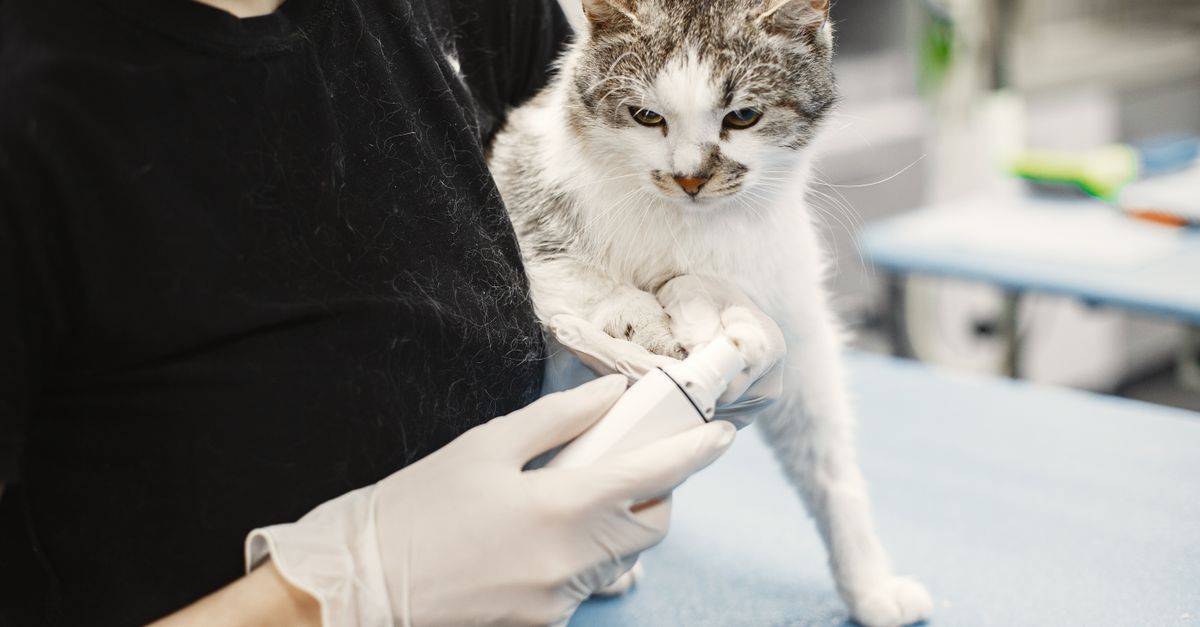
Here’s the counterintuitive part: cats purr when they’re not happy. Injured cats purr. Sick cats purr. Cats in labor purr. A cat purring at the vet may be signaling anxiety, not calm. Why?
Purring likely functions as a self-soothing mechanism — a way to cope with discomfort or fear. Some researchers theorize it’s also a non-threatening signal: “I’m vulnerable; please don’t hurt me.” Others speculate that purring delivers biological benefits beyond emotional regulation.
Source: VCA Animal Hospitals; IAABC Feline Behavior Specialists.
The intriguing hypothesis: do vibrations promote healing?
Here’s where science enters speculation — but it’s compelling. The frequency of purring — 25 to 150 Hz — overlaps with frequencies shown in human medicine to stimulate bone growth and tissue repair. Vibration therapy at similar frequencies is used to treat osteoporosis and muscle injuries in people.
Could cats be “self-medicating” with their own purrs? Some researchers hypothesize that purring vibrations might promote bone density, muscle repair, and pain relief in cats themselves. It would neatly explain why injured or post-surgical cats purr so often.
The honest caveat: This remains a hypothesis, not established fact. Human clinical trials on vibration therapy are limited, and controlled studies in cats are still underway. Don’t rely on purring as a substitute for veterinary care — but it’s a genuinely fascinating possibility worth watching.
Source: BMC Complementary Medicine and Therapy (2018); ongoing research via veterinary medicine journals.
Reading the real meaning: context is everything
A purring cat isn’t automatically a happy cat. To understand what cat purring really means, watch the entire body:
- Tense body, flat ears, tucked tail + purring = likely stress or fear.
- Relaxed posture, slow blinks, kneading + purring = likely genuine contentment.
- Purring at the vet or in a carrier = anxiety or self-soothing, not happiness.
Purring is one signal in a full vocabulary. Tail position, ear angle, eye shape, and overall posture tell the complete story. A stiff, purring cat needs space; a loose, purring cat wants affection.
What it means for cat owners
If your cat purrs while curled on your chest, odds are they’re content. But if your cat’s purring pattern changes — purring more when normally quiet, or going silent when usually vocal — it’s worth a vet check. Increased purring can signal illness or pain; sudden silence might indicate laryngeal issues or stress.
Bottom line: Purring is a tool, not a mood ring. Learn your cat’s baseline, watch their body language, and listen to context, not just sound.
FAQ
Do cats purr when happy?
Yes, but not only when happy. Cats purr when content, but also when anxious, injured, or stressed. A purring cat at the vet may be self-soothing, not relaxed. Always read body language alongside the sound.
What does it mean when a cat purrs?
It depends on context. Purring signals contentment during petting or feeding, but also functions as self-soothing during stress or pain. A relaxed posture means happiness; tense body language means anxiety, even if the purr sounds identical.
Can cats control their purring?
Not fully. Purring is semi-automatic, triggered by the brain via the laryngeal muscles and vagus nerve. Cats can’t voluntarily suppress it the way humans can stop talking, though some cats are naturally quieter than others.
Do all cats purr?
Most domestic cats do, but some are quieter or don’t purr audibly. Among wild cats, cheetahs and cougars purr, but lions, tigers, and leopards roar instead — they have a different laryngeal structure and cannot purr.
Is purring good for cats’ health?
Possibly. Purring vibrations (25–150 Hz) may stimulate bone and muscle repair, similar to vibration therapy in humans. Research is ongoing, but it remains speculative. Never rely on purring as a substitute for veterinary care.
The next time your cat purrs, don’t assume pure bliss — listen to what the rest of their body is saying. Purring is complex, context-driven, and far more interesting than “happy noise.”
Written for general interest and accuracy-checked, but not a substitute for specialist sources like your veterinarian.