

The smallest animal in the world is not the tardigrade, despite what viral science posts suggest. That title belongs to a handful of parasitic wasps barely larger than a single-celled organism—some measuring just 0.139 mm, roughly the width of a fine human hair. But the answer gets messier the closer you look, because “smallest” depends entirely on how you define “animal,” how you measure creatures that contract when stressed, and whether you’re counting larvae, parasites, or only free-living adults.
This is a question with multiple correct answers, each revealing something startling about the evolutionary limits of multicellular life. Here’s what the microscopy records actually show, ranked smallest to largest.
1. Parasitic wasps — the genuine record-holders
Size: 0.139–0.25 mm (some species reach 1 mm)
The smallest animals confirmed by science are certain parasitic wasps in the family Trichogrammatidae. Caraphractus cinctus, for instance, measures around 0.139 mm as an adult—smaller than many protozoans. These are fully formed insects with wings, legs, antennae, and compound eyes, yet they’re so reduced in size that they can parasitize the eggs of aquatic insects, swimming through water with their feathery wings acting as tiny oars.
What makes them extraordinary isn’t just size but completeness: they’re not simplified blobs of cells but intricate animals with all the anatomical systems of their larger relatives, miniaturized to the edge of what insect architecture allows. Many have lost their eyes entirely or reduced their nervous systems to a few hundred neurons. The Smithsonian National Museum of Natural History’s entomology collection documents dozens of these species, though size records vary by specimen and preservation state.
Why so small? Parasitism rewards it. The smaller the wasp, the tinier the host egg it can exploit—a niche larger wasps can’t access.
2. Loricifers — the deep-sea unknowns
Size: 0.1–0.4 mm (typically ~0.1 mm)
Loricifers are possibly the most obscure animals on this list, and that’s because they live in deep-sea sediments far from human observation. Discovered only in 1983 by Danish zoologist Reinhardt Kristensen and described in Nature, these microscopic animals have a proper mouth, digestive system, and the ability to molt—making them unambiguously multicellular and decidedly not protists.
The holotype specimen, Nanaloricus mysticus, measures around 0.1 mm. Loricifers have roughly 160 cells total, fewer than some tissue types in larger animals have in a single organ. They live in the spaces between sediment grains on the ocean floor, feeding on bacteria and detritus, and have been found at depths exceeding 8,000 meters.
The catch: loricifers are almost never encountered outside research dives. If smaller species exist, we simply haven’t sampled the right square meter of seabed yet.
3. Rotifers — everywhere, diverse, and tiny
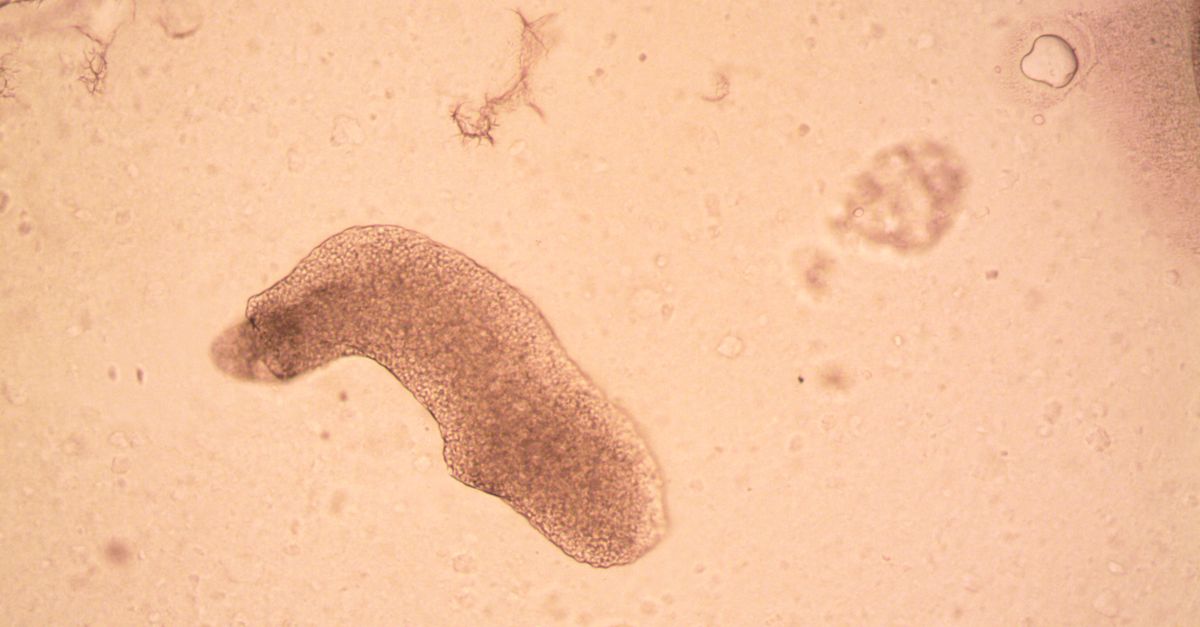
Size: 0.1–0.5 mm (highly variable across 1,800+ species)
Rotifers are the workhorses of the microscopic animal world. They’re found in nearly every freshwater habitat on Earth—puddles, moss, soil, lakes—and some marine and terrestrial environments. The smallest species measure around 0.1 mm, overlapping with loricifers in size, though most fall in the 0.2–0.5 mm range.
What sets rotifers apart is their abundance and resilience. A single liter of pond water might contain a million rotifers. They have transparent bodies, a ring of beating cilia that resembles a rotating wheel (hence “rotifer,” or “wheel-bearer”), and roughly 1,000 cells. Some species can survive complete desiccation for years, reviving when water returns—a trick called cryptobiosis that they share with tardigrades.
Rotifers aren’t a single “smallest” candidate but a sprawling phylum with sizes ranging across an order of magnitude. The tiniest, like certain Filinia species, are genuinely microscopic. The largest are visible to the naked eye as moving specks.
4. Tardigrades — famous, hardy, not the smallest

Size: 0.3–0.5 mm (some species reach 0.8 mm)
Tardigrades, or water bears, are the celebrities of the microscopic world. They survive radiation, vacuum, and extreme temperatures, facts that have earned them a permanent place in popular science. But despite their fame, they’re notably larger than the animals ranked above.
Most tardigrades measure 0.3–0.5 mm, with some robust species reaching nearly a millimeter. They have eight stubby legs, a three-part digestive system, and a simple nervous system. You can see the largest species with a decent magnifying glass if you know where to look—usually in damp moss or lichen.
Tardigrades are exceptional, just not for their size. Their ability to enter cryptobiosis and survive conditions that would obliterate most life forms is the real story. But if you’re hunting for the smallest animal in the world, tardigrades are red herrings—charming, resilient red herrings.
Why “smallest” is harder than it sounds
Measuring microscopic animals is not like measuring a cat. These creatures change size depending on hydration, life stage, and preservation method. Tardigrades contract when stressed, shrinking by 20–30%. Parasitic wasp larvae are smaller than adults. Rotifers swell or compress depending on water content.
Then there’s the definition problem. Are we counting only free-living animals, or do parasites qualify? What about larvae versus adults? Do protists count as animals? (No—they’re single-celled and belong to a different kingdom entirely.) Most sources dodge these questions, which is why you’ll see hedged answers like “among the smallest” without a definitive winner.
The tools matter, too. Animals in the 0.1–0.5 mm range require scanning electron microscopy for accurate measurement. A standard light microscope can visualize them, but fine anatomical details and precise dimensions need higher magnification. Specimens are often preserved in alcohol or frozen, which can distort size.
And finally, discovery bias: we’ve sampled terrestrial and shallow-water habitats far more thoroughly than deep-sea sediments. Smaller species almost certainly exist; we just haven’t found them yet.
Frequently asked questions
Are there animals smaller than parasitic wasps?
Not confirmed. Some parasitic wasp species push the known lower limit of animal size at around 0.139 mm. Loricifers overlap in that range, but no multicellular animal has been reliably measured smaller. It’s possible that undiscovered species in extreme environments are tinier, but as of now, parasitic wasps hold the record.
Can you see the smallest animals with a regular microscope?
Yes, but barely. A standard light microscope at 100–400× magnification can visualize rotifers and tardigrades as moving shapes. Parasitic wasps and loricifers, especially those at the 0.1 mm end of the scale, require higher magnification or scanning electron microscopy to resolve anatomical details.
Why are microscopic animals so small?
Evolution rewards smallness in certain niches. Parasites benefit from fitting into tiny host eggs. Soil-dwelling animals can exploit the microscopic gaps between particles. Smaller bodies also have faster metabolisms relative to size and can survive on scarce resources. But extreme miniaturization comes with trade-offs: reduced sensory organs, simplified nervous systems, and fewer cells mean less biological complexity.
The smallest animal in the world depends on which biological rulebook you’re using, but the record-holders are clear: parasitic wasps and loricifers, both hovering at the 0.1–0.25 mm range, with rotifers and tardigrades trailing just behind. These creatures aren’t just small—they’re architectural marvels, packing digestive tracts, nervous systems, and reproductive organs into bodies smaller than a speck of pollen. For a closer look at animals that defy belief in other ways, see 14 Animal Facts That Sound Fake But Are True (Verified by Science).
Written for general interest and accuracy-checked against peer-reviewed sources and institutional databases.