
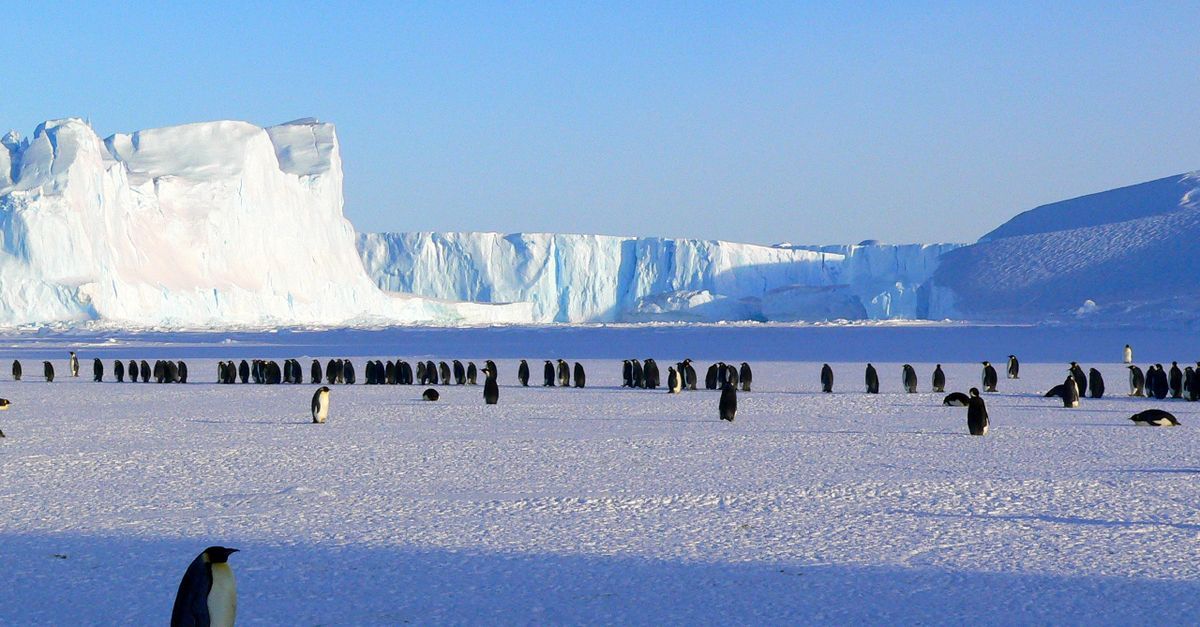
On July 21, 1983, a Soviet research station in Antarctica recorded −89.2°C (−128.6°F) — the coldest temperature ever measured on Earth’s surface. At that temperature, exposed skin freezes in seconds, fuel solidifies, and metal becomes brittle enough to shatter. And yet, life persists.
The short answer
Emperor penguins, Weddell seals, Antarctic krill, and the Antarctic toothfish call the continent’s coast home year-round. In the Arctic, polar bears, arctic foxes, and musk oxen endure winters reaching −67°C. Extremophiles like tardigrades and the Antarctic hairless midge push survival even further through suspended animation and cellular antifreeze.
Antarctica’s year-round residents
Antarctica is a continent covered by ice up to 4.8 kilometers thick, making it fundamentally different from the Arctic’s frozen ocean. The animals that live here year-round have evolved mechanisms that sound like science fiction.
Emperor penguins survive the Antarctic winter by huddling in groups of thousands, rotating positions every few seconds so no individual stays on the frigid outer edge for long. Birds in the huddle’s center maintain body temperatures around 37°C while those temporarily on the edge face ambient temperatures of −40°C. Their insulation layer — 3 to 4 inches of feathers over a fat layer — creates a thermal barrier that would make a high-end parka manufacturer envious.
Weddell seals spend winter beneath the sea ice, where water temperature hovers at a comparatively balmy −1.9°C (seawater’s freezing point). Their 5- to 6-inch blubber layer isn’t just insulation — it’s a heat battery, storing energy and minimizing the temperature gradient between their core and the environment. They maintain breathing holes in the ice by grinding through it with their teeth, a strategy that works until the teeth wear down.
Antarctic krill — the tiny crustaceans that form the base of the Southern Ocean food web — produce antifreeze proteins that lower their freezing point below the typical −0.9°C. These proteins don’t prevent freezing; they slow ice crystal growth by binding to crystal surfaces and disrupting their geometry.
The Antarctic toothfish, made famous as “Chilean sea bass” in restaurants, uses the same antifreeze glycoprotein strategy. Its blood contains molecular machinery that interferes with ice formation at the atomic level, a mechanism extensively documented in Antarctic fish research.
The Arctic’s approach

The Arctic is an ocean surrounded by land, with recorded lows of −67.8°C in Siberia and Canada — brutal, but 21 degrees warmer than Antarctica’s record. The temperature difference matters profoundly.
Polar bears have two insulation systems: a dense undercoat and long guard hairs that trap air. Their paws are furred on the bottom, creating natural snowshoes that also minimize heat loss to the ice. The USGS Polar Bear Specialist Group documents how these adaptations let them hunt seals on sea ice through eight-month winters.
Musk oxen take the “bigger is warmer” approach — adults weigh up to 400 kg and grow outer guard hairs that nearly touch the ground, with an undercoat (qiviut) that is significantly warmer than sheep’s wool. They face into blizzards as a group rather than turning away, minimizing the wind-exposed surface area.
Arctic foxes deploy the most dramatic counter-current heat exchange measured in any mammal. Blood flowing to their legs passes closely alongside blood returning to the body core; heat transfers between the vessels, warming the returning blood and cooling the outbound flow. This system recovers most of the heat that would otherwise escape through their extremities, letting them keep their feet just above freezing while maintaining a 37°C core.
The molecular tricks that make it possible
These survival strategies share a few core mechanisms, refined over millions of years:
Antifreeze proteins — found in fish, insects, and crustaceans — don’t work like car antifreeze. They don’t lower the freezing point through concentration; they physically interfere with ice crystal lattice formation. The Antarctic hairless midge (Belgica antarctica) — the continent’s only true insect — produces glycerol that acts as cellular antifreeze, letting it survive being frozen solid and thawed repeatedly.
Counter-current heat exchange shows up everywhere from penguin flippers to whale flukes. Arteries and veins run parallel, transferring heat before it reaches the extremities. The result: a penguin standing on ice keeps its feet near 0°C while its core stays at 38°C, and the temperature gradient doesn’t drain its energy reserves.
Insulation thickness matters more than insulation type. A Weddell seal’s 5- to 6-inch blubber layer isn’t just thicker than a penguin’s 3- to 4-inch feather-and-fat combination — it’s denser and optimized for underwater heat retention where water conducts heat far more effectively than air.
The extremophile exception

Here’s where we need to be precise about terms. Tardigrades — the microscopic “water bears” — are often listed among Antarctica’s survivors, and that’s technically true. But they survive by entering cryptobiosis, a state where metabolism drops to near-zero and they’re essentially dormant, not living. When conditions improve, they rehydrate and resume normal function. According to NOAA’s Antarctic research, calling them “Antarctic animals” is like calling a frozen embryo a resident of a cryogenics lab — accurate in location, misleading in biology.
The Antarctic hairless midge, by contrast, actively survives the winter. It produces glycerol, dehydrates its cells to prevent ice crystal formation, and endures freeze-thaw cycles while maintaining enough metabolic function to qualify as “alive” rather than dormant. It’s the southernmost free-living insect, and unlike tardigrades, it’s genuinely active in one of Earth’s harshest environments.
The distinction matters: we’re not just asking which organisms endure cold, but which ones live in it year-round.
What this tells us about life’s limits
These adaptations aren’t free. Emperor penguins burn through fat reserves so quickly during winter that they lose significant body mass by spring. Weddell seals’ teeth wear down from ice-grinding, eventually preventing them from maintaining breathing holes. Arctic foxes’ metabolic demands in winter far exceed summer requirements, forcing constant hunting.
The real limit isn’t cold tolerance — it’s energy. An animal can survive −89°C if it has enough insulation and the right proteins, but only if it can fuel the metabolic cost. That’s why Antarctica’s largest land animal is a wingless midge a few millimeters long, while the Arctic supports polar bears. Antarctica lacks the terrestrial food web to support large land predators; the Arctic barely does.
The National Science Foundation’s Antarctic Program and the Smithsonian’s polar collections continue documenting new adaptations, from bacteria living in subglacial lakes to marine species we’ve only recently discovered. Each finding pushes the known boundaries of where life can persist — and suggests that if Earth’s coldest places harbor this much diversity, ice-covered moons like Europa might not be as sterile as we once assumed.
FAQ
What is the coldest temperature an animal can survive?
Antarctic fish and krill survive water temperatures down to −2.2°C using antifreeze proteins. Tardigrades can endure far colder when dormant (down to near absolute zero in laboratory tests), but they’re not metabolically active at those temperatures. Active survival and dormant endurance are different categories.
How do penguins not freeze in Antarctica?
Penguins huddle in tightly packed groups that rotate positions, combine 3–4 inches of insulation (feathers plus fat), use counter-current heat exchange in their flippers, and maintain a metabolic rate high enough to generate body heat continuously. They don't "not freeze" — they actively fight freezing every second.Are tardigrades really extremophiles?
Only when we define “extremophile” loosely. Tardigrades enter cryptobiosis in extreme conditions — they don’t actively live in them. True extremophiles like the Antarctic hairless midge maintain metabolic function in brutal environments. It’s the difference between surviving a marathon by running it versus being carried across the finish line unconscious.
Which is colder: the Arctic or Antarctic?
Antarctica holds the record at −89.2°C versus the Arctic’s −67.8°C. Antarctica is a frozen continent at high elevation; the Arctic is a frozen ocean at sea level. Elevation, albedo (reflectivity), and the ocean’s heat capacity all contribute to Antarctica’s extreme cold.
The animals that endure Earth’s coldest places aren’t just tough — they’re living proof that biology can engineer solutions to problems that seem physically insurmountable.
Written for general interest and accuracy-checked, but not a substitute for specialist sources or peer-reviewed research.