
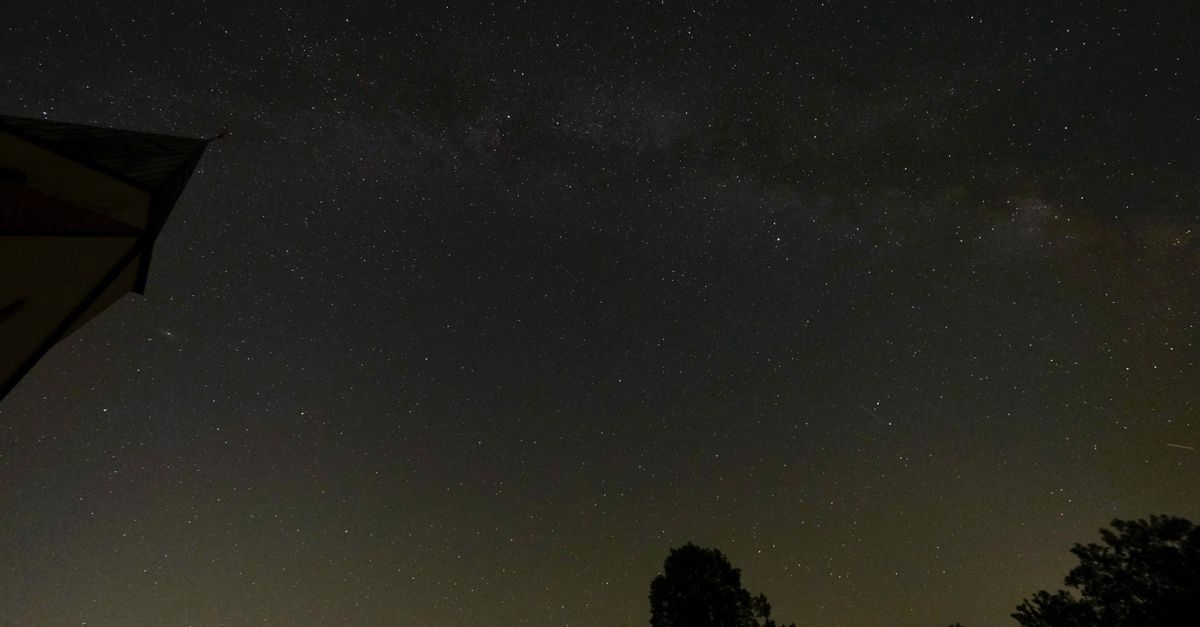
If you’ve ever stared at the night sky and wondered how far it all goes, the answer is both satisfying and humbling. The observable universe—the sphere of space from which light has had time to reach us—is approximately 93 billion light-years in diameter. That’s not 93 billion miles. It’s 93 billion times the distance light travels in a year, moving at 186,000 miles per second.
To put that in perspective: if the Milky Way galaxy were the size of a grain of sand, the observable universe would be about the size of a football field. And we’re not even close to seeing all of it.
The short answer
The observable universe is 93 billion light-years across (46.5 billion light-years from Earth to the edge in any direction). It contains an estimated 2 trillion galaxies. We can’t see beyond this because light from more distant regions hasn’t had time to reach us since the Big Bang 13.8 billion years ago—and space itself is expanding, pushing that horizon further away.
The Observable Universe: What We Can Actually Measure
When astronomers talk about the size of the universe, they’re referring to the observable universe—the region we can actually detect with telescopes, satellites, and instruments. This isn’t the entire universe; it’s just our sphere of visibility.
The 93 billion light-year figure comes from combining data from the Planck satellite (which mapped the cosmic microwave background, or CMB—the afterglow of the Big Bang) with measurements of the universe’s expansion rate, called the Hubble constant. The CMB data, released in 2018, confirms the universe is 13.8 billion years old.
But here’s the twist: the most distant observable objects aren’t 13.8 billion light-years away now. They’re roughly 46.5 billion light-years away. Why? Because space itself has been expanding while their light was traveling to us. The photons we see today left those distant galaxies when they were much closer. Over billions of years, the fabric of space stretched, carrying those galaxies further away while their light was en route.
Think of it like mailing a letter to a friend on a road trip. The letter takes three days to arrive, but by the time they get it, they’ve driven another 500 miles. The letter traveled three days; the distance it now represents is much larger.
This expansion is measured using the Hubble constant, currently estimated between 67 and 74 kilometers per second per megaparsec (a megaparsec is about 3.26 million light-years). There’s some disagreement between measurement methods—called the “Hubble tension”—but the observable universe’s scale remains solidly around 93 billion light-years in diameter.
Galaxies: The Universe’s Building Blocks
So what fills all that space? Galaxies. Lots of them.
As of 2021, astronomers estimate there are roughly 2 trillion galaxies in the observable universe. This figure comes from a study by Christopher Conselice and colleagues, published in The Astrophysical Journal, which revised earlier estimates of 200 billion galaxies upward by a factor of ten.
Why the jump? Improved telescopes—the Hubble Space Telescope’s deep-field observations and the Atacama Large Millimeter/submillimeter Array (ALMA)—revealed countless faint, distant galaxies previously invisible to us. The universe turned out to be denser with galaxies than we realized.
Our own Milky Way is about 100,000 light-years across—respectable by local standards, but just one grain of sand on that cosmic football field. The nearest major galaxy to us, Andromeda, sits about 2.5 million light-years away. Together with roughly 80 smaller dwarf galaxies, these form the Local Group, a gravitationally bound cluster about 10 million light-years across.
Zoom out further and you find the Virgo Supercluster, a massive structure roughly 110 million light-years in diameter containing the Local Group and thousands of other galaxies. Yet even that is just one supercluster among millions.
Galaxies don’t distribute evenly. They cluster along filaments—vast cosmic webs of matter separated by enormous voids where almost nothing exists. The structure resembles a sponge: dense strands with empty pockets. This is the scale of the universe in action, from atoms to superclusters.
The Cosmic Horizon: How Far Do We Really See?

Here’s where minds bend: we can’t see beyond the observable universe, and we never will.
The reason isn’t a physical wall. It’s time. Light from regions beyond 46.5 billion light-years away hasn’t had enough time to reach us since the Big Bang 13.8 billion years ago. Photons from beyond our horizon are either still en route (and will be for trillions of years) or will never arrive because the expansion of space is faster than light in those distant regions.
This is called the cosmic horizon. It’s not an edge of space; it’s the edge of what’s observable from Earth. An alien astronomer in a galaxy 10 billion light-years away would have a different observable horizon—their sphere would overlap with ours, but they’d see regions we can’t, and vice versa.
Crucially, space itself can expand faster than light. This doesn’t violate Einstein’s relativity—nothing is moving through space faster than light. Rather, space is stretching. Picture dots on an inflating balloon: the dots don’t move, but the distance between them grows. Galaxies at the edge of the observable universe are receding from us faster than light speed because the space between us is expanding.
This expansion is driven by dark energy, a mysterious force making up about 68% of the universe’s total energy budget. As dark energy accelerates expansion, the cosmic horizon effectively recedes. Distant galaxies aren’t coming into view; they’re slipping beyond our reach.
Scale of the Universe: Making the Numbers Mean Something
Numbers like “93 billion light-years” and “2 trillion galaxies” are abstract. Here’s a ladder of comparisons to ground them:
- Earth to Moon: 1.3 light-seconds
- Earth to Sun: 8.3 light-minutes
- Sun to Neptune: about 4 light-hours
- Sun to nearest star (Proxima Centauri): 4.24 light-years
- Milky Way diameter: ~100,000 light-years
- Milky Way to Andromeda: 2.5 million light-years
- Local Group diameter: 10 million light-years
- Virgo Supercluster diameter: 110 million light-years
- Observable universe diameter: 93 billion light-years
To frame it differently: the observable universe is about 850 times wider than the Virgo Supercluster, which itself contains tens of thousands of galaxies. If you could shrink the observable universe to Earth’s size, the Milky Way would be about the width of a single atom.
A light-year is the distance light travels in one year—roughly 5.88 trillion miles. Multiply that by 93 billion, and you get approximately 8.8 × 10²⁶ meters. That’s the diameter of everything we can observe.
The Wrinkle: What We Still Don’t Know

For all we’ve measured, the universe’s biggest questions remain open.
Is the universe infinite? We don’t know. The observable universe is finite—it has a measurable size. But the total universe could extend forever beyond our horizon, or it could loop back on itself like the surface of a sphere. Current measurements suggest space is nearly “flat,” which allows for either an infinite or extremely large finite universe. We have no way to observe beyond our horizon to find out.
What lies beyond the observable universe? Unknown. It could be more galaxies and space, governed by the same physics. It could be fundamentally different. It could be nothing—perhaps the observable universe is all there is. Since light from beyond the horizon can’t reach us, we have zero observational data.
Will the observable universe grow? Counterintuitively, no. As space expands faster, fewer galaxies remain within reach of us. Over trillions of years, galaxies beyond the Local Group will drift beyond the cosmic horizon, vanishing from view forever. Far-future astronomers would see a much emptier sky.
The Hubble tension: Current measurements of expansion rate don’t agree. Planck satellite data suggests a Hubble constant of about 67 km/s/Mpc; local measurements using supernovae give about 73 km/s/Mpc. This 10% discrepancy hints at measurement error, unknown physics, or both. As it resolves, the precise size may shift slightly, but the 93 billion light-year figure is robust.
Future instruments may revise galaxy counts again. The 2 trillion figure represents our current best estimate—but the universe has surprised us before.
What It Means for Us
The universe’s scale is humbling, but also grounding. Every atom in your body was forged in a star billions of years ago, scattered into space, and eventually coalesced into planets and you. The same physical laws governing galaxies 46 billion light-years away govern the electrons in your neurons.
We live on a pale blue dot in a galaxy of roughly 200 billion stars, one of 2 trillion galaxies, all within a bubble 93 billion light-years across—and we have no idea if that bubble is a fraction of something larger or all there is. What we do know: we’re here, able to ask the question and measure the answer with remarkable precision.
That’s worth pondering the next time you look up at the night sky. Those photons hitting your retina traveled millions or billions of years, crossing unimaginable distances, just to end their journey in your eye. The universe is big. We’re small. And we’re curious enough to measure it.
FAQ
How big is the observable universe in miles?
The observable universe is approximately 93 billion light-years in diameter, which equals about 5.5 × 10²³ miles. That number is so large it’s essentially meaningless—which is why astronomers stick to light-years.
Is the universe infinite?
The observable universe is finite and measurable. Whether the total universe is infinite is unknown. It may extend forever beyond our cosmic horizon, or be finite but impossibly large. Current evidence suggests it’s either infinite or unimaginably vast.
How many galaxies are in the universe?
There are roughly 2 trillion galaxies in the observable universe, based on latest estimates from Hubble and ground-based telescopes. The total number in the entire universe (if it’s larger than what we can see) is unknowable.
Can we ever see the edge of the universe?
No. The cosmic horizon isn’t a wall; it’s the limit of how far light has traveled since the Big Bang. As space expands, that horizon recedes faster than we can observe new regions. We’ll never see beyond it, even with perfect telescopes.
What is beyond the observable universe?
We don’t know. It could be more galaxies and space, indistinguishable from what we see. It could be fundamentally different. Or nothing. Since light from beyond the horizon can’t reach us, we have no data—only speculation.
Written for general interest and accuracy-checked, but not a substitute for specialist sources.